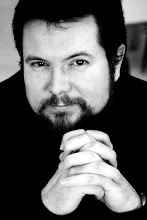
Looking over my archives, I'm amazed to see that I started this blog over two years ago. At that time everybody had a blog, it seemed, and I didn't want to be left out.
At the same time, I didn't really find very many blogs very interesting because they were so pointedly personal. They really were web logs, literally logging whatever the blogger had done that day. Today I got up and watched SNL from last night and then had a shower...
So I decided to make my blog more about thoughts I had that seemed a bit nutty if I brought them up in conversation, but somehow seemed dignified by prose. You can't just walk up to someone and say, hey, guess how I get rid of weeds! I redefine them! But somehow in the blog it sounds sort of funny, I think.
One of my favourite parts about blogging is that every once in a while people actually seem to have read what I've written. One reader told me it changed her mind about blogs in general which was a very nice compliment. Another told me she didn't get her schoolwork done one night because she went on my web site looking for research material and ended up reading the blog instead. I'm still not sure how to feel about that.
I've also been fascinated by which entries have garnered the most comments. Religion seems to get people talking -- and I heard a fair bit about my critique of Jesus take the Wheel. One of the few highly negative reactions I got, though not posted, came after my post about the war in Afghanistan -- which is understandable. And for some reason the issue of gendered bathrooms sparked a fair bit of debate. So the blog lets me keep up on the state of the culture, too, I guess.
So for those of you who have been loyal readers or who would like to be, keep reading when you can, and I'll write when I have a thought. And keep the comments coming. And tell your friends.
And we'll see where we are in a couple of years.
Sunday, April 22, 2007


Friday, April 06, 2007
About Face
Recently it has been suggested to me that I am too critical and cynical in this blog and that I should write something positive for a change; it has also been suggested that I write something about the Facebook craze that I myself have recently become part of. So consider this a two-birds-one-stone entry for my loyal readers. Here goes.
I love Facebook.
For those of you out of the loop – as I myself was until recently – Facebook is a website that allows people to post personal profiles and then link to the profiles of other people in a variety of ways. It sounds simple enough – and it is – but it quickly becomes addictive. Looking at people's pictures, exchanging messages,and, my personal favourite, getting an updated “news feed” about what your friends are doing – this is how I've been spending my time lately. What are my friends woirking on? How are they feeling? Why are more than one of them pictured suggestively with fruits and vegetables?
Admittedly, Facebook stretches the concept of “friend” pretty far. Some of my “friends” are people I don't know all that well and some are people I haven't seen in years. But that is precisely the point: it lets you keep track of people that you wouldn't have time to catch up with otherwise, or that you had lost track of altogether, or that you've always wanted to know more about but were too shy to ask.
And I guess that's what I really love about Facebook. While so many people are out there using the internet for spreading hate or selling kiddie porn or trying to convince me that I can get millions simply by sending my bank account number to Namibia, Facebook is populated by people doing what we ought to be doing more often. Getting to know each other.
And if that's not positive, well I don't know what is.
I love Facebook.
For those of you out of the loop – as I myself was until recently – Facebook is a website that allows people to post personal profiles and then link to the profiles of other people in a variety of ways. It sounds simple enough – and it is – but it quickly becomes addictive. Looking at people's pictures, exchanging messages,and, my personal favourite, getting an updated “news feed” about what your friends are doing – this is how I've been spending my time lately. What are my friends woirking on? How are they feeling? Why are more than one of them pictured suggestively with fruits and vegetables?
Admittedly, Facebook stretches the concept of “friend” pretty far. Some of my “friends” are people I don't know all that well and some are people I haven't seen in years. But that is precisely the point: it lets you keep track of people that you wouldn't have time to catch up with otherwise, or that you had lost track of altogether, or that you've always wanted to know more about but were too shy to ask.
And I guess that's what I really love about Facebook. While so many people are out there using the internet for spreading hate or selling kiddie porn or trying to convince me that I can get millions simply by sending my bank account number to Namibia, Facebook is populated by people doing what we ought to be doing more often. Getting to know each other.
And if that's not positive, well I don't know what is.
Thursday, April 05, 2007
The case for exams
A recent item in the local newspaper did something very difficult: it offended me. It offended me so much, in fact, that I have set aside my piles of late-semester work and turned to the blog to provide a rebuttal. Perhaps some of you are wondering what the point of exams is and have set aside your studying to surf the net. Let's consider the case against exams recently presented.
The author took aim at the practice of giving exams at universities, my own in particular. "They do not benefit students at all," said the author, so why have them? His critique was as follows:
1.Exams exist primarily as means by which professors torture their students by forcing them to submit to the "twisted formula" by which students are assessed and by which their efforts are graded. They are, our correspondent intones, "a new form of hell created by vindictive teachers and professors."
2. Students do not learn from exams and so they can only be a means by which the diabolical instructors, that is, the benighted ones who don't "get it," exercise their arbitrary authority over cowering students. The students, he says, are so terrified that they freeze and "are afraid to do anything," not even scratch an itch lest they be accused of misbehaving.
3. Once completed and graded, professors use exams to subject students to further "humiliation" and "punishment" by telling everyone who got the lowest grades.
I respond as follows:
1. Professors do not assign exams to be vindictive or because they have never considered any other means of evaluation. Rather, we provide exams because they are, by and large, an effective means of determining which students have acquired a mastery of the material and to what degree. Moreover, they do so in a means that is relatively objective and fair. What is the alternative? We simply spend a semester chatting and at the end, I assign whatever grade I feel like? Surely that would be open to much more abuse of power than most exams today. Exams are not perfect of course, but in many courses (my own included) they are not the only means of evaluation either.
2. To complain that students don't learn from exams is like complaining that thermometers are lousy heaters: it's true but it misses the point. Exams are not meant to teach; they are meant to test what students have learned. To have such a testing process is reasonable. If I go to a physician, it is not enough for me that she has merely explored ideas about medicine; I want to know that she has demonstrated her deep knowledge of the subject to experts in the field and has satisfied them that she knows what she's talking about. Indeed, the public has the right to expect this rigour of all university graduates. An English degree should mean that the holder has demonstrated knowledge of the English language and its literature and has shown skill in thinking and writing critically about those things. Exams may not benefit students directly, but universities exist not to serve individual students per se, but to serve society as a whole by providing meaningful education. In this sense, exams do benefit students because they help establish that their degrees actually mean something.
The notion that students are so frightened by exams that they can only sit and cower (and not, say, answer questions) is absurd. By the time they reach university, students have taken many exams and they know how to handle it. Good students realize that if they are well prepared, there is no need to panic. To be sure, most students do get stressed, but there is nothing wrong with that. Difficult things are difficult. A few may be stressed beyond healthy levels, but there are avenues by which such students can get help, including a university counseling service, an office for students with disabilities, and, of course, a range of public health services.
3. In my nine years as a university student and my seven years as a faculty member, I have never seen a professor reveal a student's low grade in class or use a bad grade to deliberately humiliate a student in front of peers. I cannot even recall knowing anyone (other than our columnist who never says he actually saw such a thing, only that "some professors" do it) who ever claimed to have witnessed this kind of event. Perhaps it has happened, but such an action would be grounds for a very serious complaint to the administration, not least of all because it would violate a student's legal right to privacy.
Exams, like thermometers, take a small sample and though they are not always exact, they are usually a good indication of what's going on. Just as you only need one thermometer to tell you how warm the whole pool is, one three hour exam is a good indication of what the student has learned in the past three months. The fact is, that good students writing fair exams do well. Students who are not well prepared have themselves to blame. If the exam is unfair, there are means of appeal. But in my experience, most professors bend over backwards to ensure that exams are fair if not downright easy. We provide review, sample questions, and advice on how to study effectively. My exams are given in a modular format to allow students to take breaks and leave the room if need be. I have more than one student this year who will be writing exams in the disability centre so that they can more easily focus on the questions.
The kind of critique that I outlined above and tried to refute is offensive not because it calls me stupid, vindictive, and Satanic -- I can handle that -- but because it speaks from an alarmingly anti-intellectual position, a position that eschews standards and rigour in favour of the nebulous "free flow of ideas" as though every idea is equally interesting and every suggestion equally true. But if that were the goal, why have universities and degrees at all? Our columnist, I suspect, like so many others, wants the benefit of an education without the real costs. He wants to be taught by learned men and women while sneering at the process by which they have become so. He wants the credential that says he is an educated man without having to show what he has done to deserve that credential.
So to all students, I say this. I know it's hard. It's good that it's hard. Really valuable things are usually hard to get. So take a deep breath, let it out, and let's all get back to work.
The author took aim at the practice of giving exams at universities, my own in particular. "They do not benefit students at all," said the author, so why have them? His critique was as follows:
1.Exams exist primarily as means by which professors torture their students by forcing them to submit to the "twisted formula" by which students are assessed and by which their efforts are graded. They are, our correspondent intones, "a new form of hell created by vindictive teachers and professors."
2. Students do not learn from exams and so they can only be a means by which the diabolical instructors, that is, the benighted ones who don't "get it," exercise their arbitrary authority over cowering students. The students, he says, are so terrified that they freeze and "are afraid to do anything," not even scratch an itch lest they be accused of misbehaving.
3. Once completed and graded, professors use exams to subject students to further "humiliation" and "punishment" by telling everyone who got the lowest grades.
I respond as follows:
1. Professors do not assign exams to be vindictive or because they have never considered any other means of evaluation. Rather, we provide exams because they are, by and large, an effective means of determining which students have acquired a mastery of the material and to what degree. Moreover, they do so in a means that is relatively objective and fair. What is the alternative? We simply spend a semester chatting and at the end, I assign whatever grade I feel like? Surely that would be open to much more abuse of power than most exams today. Exams are not perfect of course, but in many courses (my own included) they are not the only means of evaluation either.
2. To complain that students don't learn from exams is like complaining that thermometers are lousy heaters: it's true but it misses the point. Exams are not meant to teach; they are meant to test what students have learned. To have such a testing process is reasonable. If I go to a physician, it is not enough for me that she has merely explored ideas about medicine; I want to know that she has demonstrated her deep knowledge of the subject to experts in the field and has satisfied them that she knows what she's talking about. Indeed, the public has the right to expect this rigour of all university graduates. An English degree should mean that the holder has demonstrated knowledge of the English language and its literature and has shown skill in thinking and writing critically about those things. Exams may not benefit students directly, but universities exist not to serve individual students per se, but to serve society as a whole by providing meaningful education. In this sense, exams do benefit students because they help establish that their degrees actually mean something.
The notion that students are so frightened by exams that they can only sit and cower (and not, say, answer questions) is absurd. By the time they reach university, students have taken many exams and they know how to handle it. Good students realize that if they are well prepared, there is no need to panic. To be sure, most students do get stressed, but there is nothing wrong with that. Difficult things are difficult. A few may be stressed beyond healthy levels, but there are avenues by which such students can get help, including a university counseling service, an office for students with disabilities, and, of course, a range of public health services.
3. In my nine years as a university student and my seven years as a faculty member, I have never seen a professor reveal a student's low grade in class or use a bad grade to deliberately humiliate a student in front of peers. I cannot even recall knowing anyone (other than our columnist who never says he actually saw such a thing, only that "some professors" do it) who ever claimed to have witnessed this kind of event. Perhaps it has happened, but such an action would be grounds for a very serious complaint to the administration, not least of all because it would violate a student's legal right to privacy.
Exams, like thermometers, take a small sample and though they are not always exact, they are usually a good indication of what's going on. Just as you only need one thermometer to tell you how warm the whole pool is, one three hour exam is a good indication of what the student has learned in the past three months. The fact is, that good students writing fair exams do well. Students who are not well prepared have themselves to blame. If the exam is unfair, there are means of appeal. But in my experience, most professors bend over backwards to ensure that exams are fair if not downright easy. We provide review, sample questions, and advice on how to study effectively. My exams are given in a modular format to allow students to take breaks and leave the room if need be. I have more than one student this year who will be writing exams in the disability centre so that they can more easily focus on the questions.
The kind of critique that I outlined above and tried to refute is offensive not because it calls me stupid, vindictive, and Satanic -- I can handle that -- but because it speaks from an alarmingly anti-intellectual position, a position that eschews standards and rigour in favour of the nebulous "free flow of ideas" as though every idea is equally interesting and every suggestion equally true. But if that were the goal, why have universities and degrees at all? Our columnist, I suspect, like so many others, wants the benefit of an education without the real costs. He wants to be taught by learned men and women while sneering at the process by which they have become so. He wants the credential that says he is an educated man without having to show what he has done to deserve that credential.
So to all students, I say this. I know it's hard. It's good that it's hard. Really valuable things are usually hard to get. So take a deep breath, let it out, and let's all get back to work.
Monday, February 12, 2007
Jesus, give me a break...
Am I the only one who thinks that the (now) Grammy-award-winning song "Jesus, take the Wheel" is one of the worst hits ever recorded?
For those of you who have been living in blissful ignorance of this bit of pop culture bilge, it is the ballad of an ordinary woman who loses control of her car on an icy road and rather than, say, steer into the skid, throws up her hands and cries out "Jesus, take the wheel!" and is (I'm not kidding) miraculously saved. The experience causes her to repent her lack of faith and promises to let "Jesus take the wheel" from there on.
What bothers me most about this song is its unbelievably inane vision of life and of religious experience. On one level, this little ditty -- just about the most popular one in the world thanks to the media machine called American Idol that has made Woody Underwear a household name -- is an insult to religious people everywhere because it puts Christianity on about the level of the AAA. Christ as roadside assistance.
But of course the point is more profound than that. The story is a metaphor, but what is the metaphorical point? Apparently that the way to live in the world is to abandon all personal effort and let "Jesus" (as the Sunday school kids call him) control your life. And that to me, is the most horrifying part of the whole thing. Only the worst kind of zealot would suggest that human beings should exercise no agency in the world because, let's face it, the world has plenty of troubles and all the evidence so far indicates that if there is a God, he is not going to intervene to save us from ourselves (why not? well now, that's a question I would like to pose to Gordie Sampson, the Canadian author of this nugget of iron pyrite).
My point is not that Christianity, or any religion, is necessarily a terrible thing, but anyone who teaches, even by pseudo-Christian pop-culture allegory, that human beings do not have a profound responsibility to one another should be ashamed.
For those of you who have been living in blissful ignorance of this bit of pop culture bilge, it is the ballad of an ordinary woman who loses control of her car on an icy road and rather than, say, steer into the skid, throws up her hands and cries out "Jesus, take the wheel!" and is (I'm not kidding) miraculously saved. The experience causes her to repent her lack of faith and promises to let "Jesus take the wheel" from there on.
What bothers me most about this song is its unbelievably inane vision of life and of religious experience. On one level, this little ditty -- just about the most popular one in the world thanks to the media machine called American Idol that has made Woody Underwear a household name -- is an insult to religious people everywhere because it puts Christianity on about the level of the AAA. Christ as roadside assistance.
But of course the point is more profound than that. The story is a metaphor, but what is the metaphorical point? Apparently that the way to live in the world is to abandon all personal effort and let "Jesus" (as the Sunday school kids call him) control your life. And that to me, is the most horrifying part of the whole thing. Only the worst kind of zealot would suggest that human beings should exercise no agency in the world because, let's face it, the world has plenty of troubles and all the evidence so far indicates that if there is a God, he is not going to intervene to save us from ourselves (why not? well now, that's a question I would like to pose to Gordie Sampson, the Canadian author of this nugget of iron pyrite).
My point is not that Christianity, or any religion, is necessarily a terrible thing, but anyone who teaches, even by pseudo-Christian pop-culture allegory, that human beings do not have a profound responsibility to one another should be ashamed.
Sunday, February 04, 2007
Weighing in on Small Business
In the circles in which I run (academics, progressives) there is a general feeling that small business is a fine thing. Local, independent operations, run by ordinary folk who call their customers by name and go that extra mile because of the pride they take in their work and in their communities -- this is the vision that is usually offered. By shopping at such places, I am told, I keep big corporations at bay and support the local economy.
It all sounds very nice and homey and wholesome. But I find it harder to believe every day.
Living in a moderate-sized town these past six and a half years, I've come to feel that a great many small businesses are small for a reason. If the operators knew what they were doing, they'd be bigger.
Today, for instance, I decided it was time to get a new bathroom scale (yeah, I wore the old one out, hardee-har-har...). So I set out into town to find the sort I wanted. Digital and modern, you know the kind I mean. Anyway, to the hardware store -- no dice. They had exactly one scale in stock and it was a crummy dial model. So the big grocery stores (these are stores that sell barbells and cell phones -- is a scale too big a leap?) but no luck at either of them. So on to the pharmacies (three different ones). The closest I got was when I was told they sometimes get them in around Christmas time. I almost asked if they sold time machines, then, but I'm trying to rein myself in these days.
So home it was, and on to the internet where I found just what I wanted at a site called Canadian Weigh. Stylish and modern my new scale is and packed with cool features. And it was on sale too. This company is going to be big.
So my hard-earned dollars that might have gone to the local economy -- might have if any one of six different stores had what I was in the market for -- has now gone elsewhere.
And no one in any of those stores knew my name.
It all sounds very nice and homey and wholesome. But I find it harder to believe every day.
Living in a moderate-sized town these past six and a half years, I've come to feel that a great many small businesses are small for a reason. If the operators knew what they were doing, they'd be bigger.
Today, for instance, I decided it was time to get a new bathroom scale (yeah, I wore the old one out, hardee-har-har...). So I set out into town to find the sort I wanted. Digital and modern, you know the kind I mean. Anyway, to the hardware store -- no dice. They had exactly one scale in stock and it was a crummy dial model. So the big grocery stores (these are stores that sell barbells and cell phones -- is a scale too big a leap?) but no luck at either of them. So on to the pharmacies (three different ones). The closest I got was when I was told they sometimes get them in around Christmas time. I almost asked if they sold time machines, then, but I'm trying to rein myself in these days.
So home it was, and on to the internet where I found just what I wanted at a site called Canadian Weigh. Stylish and modern my new scale is and packed with cool features. And it was on sale too. This company is going to be big.
So my hard-earned dollars that might have gone to the local economy -- might have if any one of six different stores had what I was in the market for -- has now gone elsewhere.
And no one in any of those stores knew my name.
Saturday, February 03, 2007
The Wonderful World of ISDY
Today I bring you a new feature: ISDY, short for "I'm So Disappointed in You."
This first installment shakes a disapproving head at the National Restaurant Association. As you may have read, a new commercial shows Britney Spears' ex Kevin Federline in a glitzy music video, but the gag is that it's just a fantasy sequence and poor Kevin is really working in a fast food restaurant.
So far so good -- until Steven Anderson, president of the NRA (the food people, remember, not the gun people) complains that -- wait for it -- the commercial is insulting to restaurant workers. Imagine suggesting that some restaurant workers might actually prefer to be doing something else, like, oh, I don't know, being rock stars.
Now, I have worked in restaurants in my time, and I will be the first to say that it is hard work; those who bust their butts to make an honest living and help people get their meals have my admiration. But let's face it, for virtually all fast-food workers, this is not their dream job. They didn't go to university and major in Rapid Gastronomy so they could fry burgers and mop up spilled ketchup. I dare Mr. Anderson to go into any McDonald's or Burger King and offer a million bucks to anyone who's willing to promise to never to work in the restaurant business again. Do you think he'd have any takers? Of course he would. The place would clear out. Why do think they have American Idol?
My point is that lobby groups like the NRA (butter, remember, not guns) should actually be working to improve the conditions of the people they represent. When people like Steven Anderson come out with frivolous complaints about insults that never were, it breeds cynicism about social action in general and undermines the credibility of those actually trying to improve the lives and rights of working people.
So, Steven Anderson and the National Restaurant Association, I have only this to say: I'm so disappointed in you.
This first installment shakes a disapproving head at the National Restaurant Association. As you may have read, a new commercial shows Britney Spears' ex Kevin Federline in a glitzy music video, but the gag is that it's just a fantasy sequence and poor Kevin is really working in a fast food restaurant.
So far so good -- until Steven Anderson, president of the NRA (the food people, remember, not the gun people) complains that -- wait for it -- the commercial is insulting to restaurant workers. Imagine suggesting that some restaurant workers might actually prefer to be doing something else, like, oh, I don't know, being rock stars.
Now, I have worked in restaurants in my time, and I will be the first to say that it is hard work; those who bust their butts to make an honest living and help people get their meals have my admiration. But let's face it, for virtually all fast-food workers, this is not their dream job. They didn't go to university and major in Rapid Gastronomy so they could fry burgers and mop up spilled ketchup. I dare Mr. Anderson to go into any McDonald's or Burger King and offer a million bucks to anyone who's willing to promise to never to work in the restaurant business again. Do you think he'd have any takers? Of course he would. The place would clear out. Why do think they have American Idol?
My point is that lobby groups like the NRA (butter, remember, not guns) should actually be working to improve the conditions of the people they represent. When people like Steven Anderson come out with frivolous complaints about insults that never were, it breeds cynicism about social action in general and undermines the credibility of those actually trying to improve the lives and rights of working people.
So, Steven Anderson and the National Restaurant Association, I have only this to say: I'm so disappointed in you.
Saturday, January 27, 2007
Playing favourites
I'm going to let you in on three little secrets.
First, professors have favourite students.
Some don't like to talk about it, and some may pretend it isn't true, but its inevitable. Why? Not because we're "human" but because for the most part, professors get into professing because they want to inspire students the way they were inspired once upon a time. Now, I know that for some profs that has long worn off and their trying to get through the days without going crazy -- and not always succeeding. But those ones are in the minority. Professors care about what they're doing and they quite understandably want students to care too. And so when professors see two students, one carefully taking notes, the other staring at the wall, one actually listening, the other drawing cartoons in the margins of a scribbler, one asking intelligent questions and the other running off at every opportunity...well, which one of these students would make YOU feel like you're not wasting your life?
So here's another secret. I don't think that professors having favourites is such a bad thing.
The last secret is the secret to academic success. Find the professors you respect, the ones that really know their stuff, the ones that really care, the ones that really want you to learn. Then be their favourites.
First, professors have favourite students.
Some don't like to talk about it, and some may pretend it isn't true, but its inevitable. Why? Not because we're "human" but because for the most part, professors get into professing because they want to inspire students the way they were inspired once upon a time. Now, I know that for some profs that has long worn off and their trying to get through the days without going crazy -- and not always succeeding. But those ones are in the minority. Professors care about what they're doing and they quite understandably want students to care too. And so when professors see two students, one carefully taking notes, the other staring at the wall, one actually listening, the other drawing cartoons in the margins of a scribbler, one asking intelligent questions and the other running off at every opportunity...well, which one of these students would make YOU feel like you're not wasting your life?
So here's another secret. I don't think that professors having favourites is such a bad thing.
The last secret is the secret to academic success. Find the professors you respect, the ones that really know their stuff, the ones that really care, the ones that really want you to learn. Then be their favourites.
TV Commercial Hall of Shame: New Members
1. Toyota -- for their entire new series of ads that claim there should no longer be a difference between Want and Need. You get the idea? If you want it, you need it. No need for self restraint, moderation, a healthy bank account. Don't spend money on the braces that your kid NEEDS, you WANT a shiny new car and that's just as important. Yes, what you want is now what you need. Toyota ad execs, how do you look at yourselves in the mirror?
2. PharmaChoice -- for their latest "It's like having a pharmacist for your best friend" commercial. In this one, a woman in a restaurant orders a glass of water whereupon her "friend" launches into a whole big speech about how she might have diabetes. If my friend said that I'd throw the water in her smug face. "Diabetes? Are you trying to scare me to death? You're not a doctor!" Pharmacists everywhere must be cringing.
[Note: Earlier I misidentified the company as PharmaSave. Apologies. I don't know what their commericals are like, but they're not these ones.]
2. PharmaChoice -- for their latest "It's like having a pharmacist for your best friend" commercial. In this one, a woman in a restaurant orders a glass of water whereupon her "friend" launches into a whole big speech about how she might have diabetes. If my friend said that I'd throw the water in her smug face. "Diabetes? Are you trying to scare me to death? You're not a doctor!" Pharmacists everywhere must be cringing.
[Note: Earlier I misidentified the company as PharmaSave. Apologies. I don't know what their commericals are like, but they're not these ones.]
Saturday, November 11, 2006
Dear Leaders of the World,
Your states need to be entirely secular. Tolerate and protect religious diversity by all means, but your governments should have no official religion, nor should religious affiliation or ideas be involved in any way in the choosing of public officials.
Your laws should be entirely secular and not based on any faith tradition. No religious schools should be publicly funded, nor should religious groups be subsidized, even through tax exemptions.
Do this now and you will have peace. Continue to define your nations by religion, continue to rule with religious doctrine at the centre of your political ideology, continue to make religion the raison d'etre of your nations, and you will have endless hardship.
Don't say I didn't warn you.
Sincerely,
A friend at Pettrichor.
Your laws should be entirely secular and not based on any faith tradition. No religious schools should be publicly funded, nor should religious groups be subsidized, even through tax exemptions.
Do this now and you will have peace. Continue to define your nations by religion, continue to rule with religious doctrine at the centre of your political ideology, continue to make religion the raison d'etre of your nations, and you will have endless hardship.
Don't say I didn't warn you.
Sincerely,
A friend at Pettrichor.
Wednesday, November 08, 2006
Today's Email
Today I got an email urging me to write to Stephen Harper and urge him to change our aggressive policy in Afghanistan. Now, I'm not a supporter of Harper, nor do I believe we should "support our troops" without regard for what those troops are doing.
But I did find it strange that not too long ago I was getting equally impassioned emails telling me to urge our government to do something about the brutal Taliban regime in that very same Afghanistan.
The emailers were right the first time. The Taliban are fundamentalist toughs who by all accounts, brutalized women, suppressed freedom of religion and expression, and deliberately harboured and supported terrorists. They were never recognized by the international community as a legitimate government. And if the west played some role in bringing them to power when they were fighting Soviet occupation, that is all the more reason we should be there to set things right in that region.
The Taliban fighters are not heroes. They are thugs and bullies. And they deserve what they get.
And I'm emailing this to the Prime Minister.
But I did find it strange that not too long ago I was getting equally impassioned emails telling me to urge our government to do something about the brutal Taliban regime in that very same Afghanistan.
The emailers were right the first time. The Taliban are fundamentalist toughs who by all accounts, brutalized women, suppressed freedom of religion and expression, and deliberately harboured and supported terrorists. They were never recognized by the international community as a legitimate government. And if the west played some role in bringing them to power when they were fighting Soviet occupation, that is all the more reason we should be there to set things right in that region.
The Taliban fighters are not heroes. They are thugs and bullies. And they deserve what they get.
And I'm emailing this to the Prime Minister.
Monday, November 06, 2006
TV Commercial Hall of Shame: First Inductee
I like TV. I like it very much. And like most people I put up with commercials because they are necessary -- they have to pay the bills and all that.
Now as works of art, most TV commercials suck, particularly local commercials featuring spokespeople who forget how to string a sentence together once they are in front of the camera. C'est la vie. But every once in a while, I see a commercial that fills me with moral outrage and I just have to say something about it. And what are blogs for if not to pontificate about modern culture?
I'm talking about ads like the ones the government put out recently to promote work place safety. In one, a harried father is rushing about the kitchen trying to make dinner for one kid and help another kid with homework; but wait, that's not another kid who needs help learning to spell, that's a full grown woman whose been disabled by an injury! Another ad in the same series shows a little girl who clearly does not want to go out in public with her father who needs help to dress himself due to his injury. The message here is that you should watch yourself at work or else you may end up disabled, and, according to the government, disabled people are an embarrassment and burden on their families. Shame!
But those are a bit old, and my aim is to identify ads currently on the air to ad them to my Hall of Shame.
And the first inductee is: Pfizer, maker of the painkiller Celebrex! Current ads for Celebrex show a series of older folks turning to the camera and enjoing the viewer in various earnest ways, to "ask your doctor about it." Now, under Canadian law as I understand it, drug companies can say the name of the drug or what it does, but not both, so the makers of Celebrex are hoping that older Canadians will take their advice and ask their doctors. Fair enough. That's advertising. But here's the kicker: at the end of the ad, a particularly earnest grandmother type, looks right into the lens and says, "Ask your doctor. He's the expert."
Now, it's bad enough that this commercial implies that patients are supposed to do whatever their physicians advise -- after all, what the hell do patients know? This is especially interesting since a Google search of Celebrex brings up plenty of stories about lawsuits that have been filed against Pfizer in connection with the drug. What really makes this ad shameful, though, is the pronoun: "HE's the expert." He? Leave it to Pfizer to tell us that not only are doctors unimpeachable experts, they are all men too. Women have had to fight hard to gain access to the medical profession and the slow progress can be reasonably attributed to the attitude that real medicine is serious business and only suitable for men -- and this is the attitude that Pfizer encourages with ads like this one. Shame on you Pfizer.
Now as works of art, most TV commercials suck, particularly local commercials featuring spokespeople who forget how to string a sentence together once they are in front of the camera. C'est la vie. But every once in a while, I see a commercial that fills me with moral outrage and I just have to say something about it. And what are blogs for if not to pontificate about modern culture?
I'm talking about ads like the ones the government put out recently to promote work place safety. In one, a harried father is rushing about the kitchen trying to make dinner for one kid and help another kid with homework; but wait, that's not another kid who needs help learning to spell, that's a full grown woman whose been disabled by an injury! Another ad in the same series shows a little girl who clearly does not want to go out in public with her father who needs help to dress himself due to his injury. The message here is that you should watch yourself at work or else you may end up disabled, and, according to the government, disabled people are an embarrassment and burden on their families. Shame!
But those are a bit old, and my aim is to identify ads currently on the air to ad them to my Hall of Shame.
And the first inductee is: Pfizer, maker of the painkiller Celebrex! Current ads for Celebrex show a series of older folks turning to the camera and enjoing the viewer in various earnest ways, to "ask your doctor about it." Now, under Canadian law as I understand it, drug companies can say the name of the drug or what it does, but not both, so the makers of Celebrex are hoping that older Canadians will take their advice and ask their doctors. Fair enough. That's advertising. But here's the kicker: at the end of the ad, a particularly earnest grandmother type, looks right into the lens and says, "Ask your doctor. He's the expert."
Now, it's bad enough that this commercial implies that patients are supposed to do whatever their physicians advise -- after all, what the hell do patients know? This is especially interesting since a Google search of Celebrex brings up plenty of stories about lawsuits that have been filed against Pfizer in connection with the drug. What really makes this ad shameful, though, is the pronoun: "HE's the expert." He? Leave it to Pfizer to tell us that not only are doctors unimpeachable experts, they are all men too. Women have had to fight hard to gain access to the medical profession and the slow progress can be reasonably attributed to the attitude that real medicine is serious business and only suitable for men -- and this is the attitude that Pfizer encourages with ads like this one. Shame on you Pfizer.
Sunday, November 05, 2006
The case against varsity athletics
First, let me be clear on a couple of things. Number one, I have nothing against sports in general or athletes. More specifically, I have nothing against any particular varsity athlete at my university.
That said, I've been thinking lately about the wisdom of university athletics in general. And my conclusion lately has been that, on the whole, it's a bad idea.
For one thing there is the tremendous cost of such undertakings, even when they are relatively modest. At my own august institution, for instance, there are only five sports teams, with a total of 79 players. It is rumoured, however, that each of those player is paid some $2000 a year to be on those teams. Those payments alone -- if the rumours are true -- total $158 000. And that's just for players. Each of those teams has a staff of coaches whose salaries must, one would imagine, add up to somewhere in the six figures. Add in transportation, uniforms, whatever costs may be associated with training -- and of course, the extra help that athletes are given with their academics -- and the costs must easily exceed half a million dollars. If anyone has the exact numbers from the university budget, I would be grateful to see them, but in general I am not made privy to such information (a search of my university's web site for "budget" yields no help either).
To put that half million in perspective, it's roughly the amount that would be needed to pay salary of 10 new CBU professors. Or somewhere between 500 and 1000 new library books every year.
Now some would argue that this money is an investment. Sports, after all, get people interested and excited and thus draw positive attention to the university, so the money spent is good for everyone. But in a way, it is the attention paid to varsity athletics that is precisely the problem.
After all, sports, in general, is doing very well in our society. Top athletes make millions, sometimes hundreds of millions in salary and millions more in endorsements. Even amateur hockey draws thousands of fans to arenas and even makes the sports channels, not to mention the evening news. Intellectual pursuits, by contrast, do not fair nearly so well. Only an elite few pay any attention to scholarly matters, and for the most part, that doesn't bother me, since most of it is highly specialized anyway.
But the university is the one place that societies have set aside for the purpose of promoting and celebrating the life of the mind. That's what makes them special. That's what sets the university, as a social institution apart. Or ought to, in any case. Is it, then, too much to ask that university resources not be directed towards the celebration of physical agility rather than mental? Is it right that students who win major international scholarships get only passing mention while we are flooded with news about athletes? Is it right that many deserving students get no funding at all, while their classmates get a big chunk of their tuition paid by virtue of having a a particularly high vertical leap? Is it right that our athletic facilities are being constantly upgraded while our theatre fulls into ruin? And if sports do bring attention, is that really what we want to be known for? If that's the case, maybe close down the academic side altogether and make the school one big sports club.
Don't get me wrong. I like sports. And I stress in my experience, many student athletes are both nice people and good scholars. Moreover, I freely admit that I have enjoyed varsity athletics in the past. But I think I will take a break from attending such events.
Maybe we all should.
That said, I've been thinking lately about the wisdom of university athletics in general. And my conclusion lately has been that, on the whole, it's a bad idea.
For one thing there is the tremendous cost of such undertakings, even when they are relatively modest. At my own august institution, for instance, there are only five sports teams, with a total of 79 players. It is rumoured, however, that each of those player is paid some $2000 a year to be on those teams. Those payments alone -- if the rumours are true -- total $158 000. And that's just for players. Each of those teams has a staff of coaches whose salaries must, one would imagine, add up to somewhere in the six figures. Add in transportation, uniforms, whatever costs may be associated with training -- and of course, the extra help that athletes are given with their academics -- and the costs must easily exceed half a million dollars. If anyone has the exact numbers from the university budget, I would be grateful to see them, but in general I am not made privy to such information (a search of my university's web site for "budget" yields no help either).
To put that half million in perspective, it's roughly the amount that would be needed to pay salary of 10 new CBU professors. Or somewhere between 500 and 1000 new library books every year.
Now some would argue that this money is an investment. Sports, after all, get people interested and excited and thus draw positive attention to the university, so the money spent is good for everyone. But in a way, it is the attention paid to varsity athletics that is precisely the problem.
After all, sports, in general, is doing very well in our society. Top athletes make millions, sometimes hundreds of millions in salary and millions more in endorsements. Even amateur hockey draws thousands of fans to arenas and even makes the sports channels, not to mention the evening news. Intellectual pursuits, by contrast, do not fair nearly so well. Only an elite few pay any attention to scholarly matters, and for the most part, that doesn't bother me, since most of it is highly specialized anyway.
But the university is the one place that societies have set aside for the purpose of promoting and celebrating the life of the mind. That's what makes them special. That's what sets the university, as a social institution apart. Or ought to, in any case. Is it, then, too much to ask that university resources not be directed towards the celebration of physical agility rather than mental? Is it right that students who win major international scholarships get only passing mention while we are flooded with news about athletes? Is it right that many deserving students get no funding at all, while their classmates get a big chunk of their tuition paid by virtue of having a a particularly high vertical leap? Is it right that our athletic facilities are being constantly upgraded while our theatre fulls into ruin? And if sports do bring attention, is that really what we want to be known for? If that's the case, maybe close down the academic side altogether and make the school one big sports club.
Don't get me wrong. I like sports. And I stress in my experience, many student athletes are both nice people and good scholars. Moreover, I freely admit that I have enjoyed varsity athletics in the past. But I think I will take a break from attending such events.
Maybe we all should.
Friday, October 20, 2006
Why has no one noticed...
...that more Americans have now died in Bush's Iraq war than did at the World Trade Centre on September 11, 2001?
Friday, October 13, 2006
Vanessa
I try to keep this blog fairly non-personal because, well, I'm a kind of heady guy and my private life is not very interesting anyway. But it has recently occurred to me that there is someone who deserves to be recognized in this forum for her incredible contribution to my life and thought.
Her name is Vanessa and here are SOME of the things she has has taught me:
1. Sometimes being nice is more important than being right.
2. Sometimes being right is more important than being correct.
3. Think ahead.
4. Look back.
5. Everybody has a harder time getting through the day than you think. Don't begrudge them what they need.
6. You can't always tell what people are thinking.
7. You can't always care what people are thinking.
8. Almost everyone is a nice person if you know how to talk to them.
9. You don't have to be the best.
10. There IS a good argument against private health care: we want the richest and most powerful in our society to have a vested interest in the public system.
So if you see her, say thanks from me.
Her name is Vanessa and here are SOME of the things she has has taught me:
1. Sometimes being nice is more important than being right.
2. Sometimes being right is more important than being correct.
3. Think ahead.
4. Look back.
5. Everybody has a harder time getting through the day than you think. Don't begrudge them what they need.
6. You can't always tell what people are thinking.
7. You can't always care what people are thinking.
8. Almost everyone is a nice person if you know how to talk to them.
9. You don't have to be the best.
10. There IS a good argument against private health care: we want the richest and most powerful in our society to have a vested interest in the public system.
So if you see her, say thanks from me.
Wednesday, September 20, 2006
Help! I might not be opposed to private healthcare!
Recently I was reading yet another article on private health care -- against it of course -- and I was struck by the hollowness of an argument I had never questioned before. You've probably heard it yourself: why should a rich person get faster or better care just because they have money? And we all reply: they shouldn't! down with private health care!
But what struck me this time was that if we apply that principle to health care, it is strange that we apply it virtually nowhere else among our important social institutions. After all, we don't ask the same question about public education. Why should rich people be able to send their kids to a private school while everyone else has to make do with the public system? Or transportation. Why should some people have to rely on public transportation when others get to drive in privately-owned cars?
The answer to all of these questions -- including the one about health care -- is that we value the freedom we have to earn money and spend it as we see fit. We don't want the state telling us exactly what we can and cannot do with our own money. It our money. We earned it or someone gave it to us and we want to trade it for what we want. That's why its better to be rich than poor. That's why we seek to alleviate poverty. That's why we all want to be rich.
Needless to say, this line of thinking has caused me a very Canadian crisis of conscience. How can I NOT be against private health care, progressive Canuck that I am? Surely someone out there can give me a convincing series of arguments that do not require being opposed to private property altogether.
Would the private system drain the best doctors away from the public? Maybe, but that might well be offset by the willingness of the best doctors to stay in Canada rather than pursue a private practice in the US. Moreover, my sources in the education field say that a great many teachers prefer the public system because they are willing to trade lower pay for greater stability. And in any case, the private system would presumably never be very big since there are -- by definition -- only so many elite patients willing to go there.
Would private health care mean governments would invest less in the public system? There's no reason it would have to. That would be a matter of allocating funds just as they do now, and private care would not mean less money would be available for public care. Indeed, the poor and middle class Canadians might be better served if there were fewer people in the public system as at least some seek care elsewhere.
You see how far its gone? Someone, anyone, throw me a lifeline!
But what struck me this time was that if we apply that principle to health care, it is strange that we apply it virtually nowhere else among our important social institutions. After all, we don't ask the same question about public education. Why should rich people be able to send their kids to a private school while everyone else has to make do with the public system? Or transportation. Why should some people have to rely on public transportation when others get to drive in privately-owned cars?
The answer to all of these questions -- including the one about health care -- is that we value the freedom we have to earn money and spend it as we see fit. We don't want the state telling us exactly what we can and cannot do with our own money. It our money. We earned it or someone gave it to us and we want to trade it for what we want. That's why its better to be rich than poor. That's why we seek to alleviate poverty. That's why we all want to be rich.
Needless to say, this line of thinking has caused me a very Canadian crisis of conscience. How can I NOT be against private health care, progressive Canuck that I am? Surely someone out there can give me a convincing series of arguments that do not require being opposed to private property altogether.
Would the private system drain the best doctors away from the public? Maybe, but that might well be offset by the willingness of the best doctors to stay in Canada rather than pursue a private practice in the US. Moreover, my sources in the education field say that a great many teachers prefer the public system because they are willing to trade lower pay for greater stability. And in any case, the private system would presumably never be very big since there are -- by definition -- only so many elite patients willing to go there.
Would private health care mean governments would invest less in the public system? There's no reason it would have to. That would be a matter of allocating funds just as they do now, and private care would not mean less money would be available for public care. Indeed, the poor and middle class Canadians might be better served if there were fewer people in the public system as at least some seek care elsewhere.
You see how far its gone? Someone, anyone, throw me a lifeline!
Monday, July 03, 2006
Sunday shopping -- a dialogue
C: What is your position on Sunday shopping?
T: In my view, the question is not Sunday shopping but rather Sunday opening. I believe store owners have the right to open on Sundays and that right should not be restricted.
C: But do people really need to shop seven days a week?
T: No, but nor do they need to shop six days a week. Or even five. If it came to need, we could probably get by with one day a week. But it isn't a question of need; it's a question of freedom.
C: I think it's good for families.
T: On what evidence?
C: Well, I don't know what evidence there could be.
T: Well, one indicator of healthy family life might be the divorce rate. If NS was the only province without Sunday shopping and had a much lower divorce rate than other provinces, that might be one bit of evidence. But it doesn't. In fact, NS, is right in the middle of the pack.
C: But still, it's good for families to be together one day of the week.
T: Maybe. Or maybe it's bad if the family is relying on income they could earn on Sundays. In any case, what about the families of people who work at drug stores or convenience stores?
C: Well, there are only a couple of exceptions.
T: Really? What about police officers, casino workers, tourist industry workers, people who work in restaurants and at movie theatres? People who work in radio and television? Taxi drivers? These people all seem to get along.
C: OK, but for those who do work in retail...
T: Yes, but many of those people work on Sundays anyway!
C: What?
T: Yes, because the law does not forbid people working, only the stores actually opening for business, so many stores actually have employees come in to clean and stock shelves even though the store is closed.
C: So what's the point of the law, then?
T: Exactly.
T: In my view, the question is not Sunday shopping but rather Sunday opening. I believe store owners have the right to open on Sundays and that right should not be restricted.
C: But do people really need to shop seven days a week?
T: No, but nor do they need to shop six days a week. Or even five. If it came to need, we could probably get by with one day a week. But it isn't a question of need; it's a question of freedom.
C: I think it's good for families.
T: On what evidence?
C: Well, I don't know what evidence there could be.
T: Well, one indicator of healthy family life might be the divorce rate. If NS was the only province without Sunday shopping and had a much lower divorce rate than other provinces, that might be one bit of evidence. But it doesn't. In fact, NS, is right in the middle of the pack.
C: But still, it's good for families to be together one day of the week.
T: Maybe. Or maybe it's bad if the family is relying on income they could earn on Sundays. In any case, what about the families of people who work at drug stores or convenience stores?
C: Well, there are only a couple of exceptions.
T: Really? What about police officers, casino workers, tourist industry workers, people who work in restaurants and at movie theatres? People who work in radio and television? Taxi drivers? These people all seem to get along.
C: OK, but for those who do work in retail...
T: Yes, but many of those people work on Sundays anyway!
C: What?
T: Yes, because the law does not forbid people working, only the stores actually opening for business, so many stores actually have employees come in to clean and stock shelves even though the store is closed.
C: So what's the point of the law, then?
T: Exactly.
Sunday, June 18, 2006
Frankly...
So I finally warranted a mention in Frank Magazine. It was fleeting and inaccurate, but there I am, nevertheless, identified as one of the professors into whose class women came univited to read their feminist manifesto on International Women's Day.
First, as a matter of fact, this report is untrue. Students did not enter my class on that day. If they ever do, I will insist that they stay and answer questions, including questions from me. No one speaks to my class without having to answer for what they say.
Now my concern is that given my previous post on this matter and the Frank story and what I've just written, some of you might have the impression that I am not a feminist. So let me be clear.
I am a feminist.
By that I mean that I see the amelioration of the overall status of women in our society as a pressing social concern.
One issue that is of particular concern for me, is the unequal participation of women in Canadian politics. In Canada, for instance, we have a House of Commons where fewer than 21% of members are women (that, by the way, puts us 43rd in the world). No woman leads a national political party (though that MAY change soon) and no woman has ever been chosen Canadian Prime Minister by way of a national election.
Now, why has this come to be? Certainly not because women are legally barred from politics; they're not. Similarly, it cannot be that women are naturally unsuited to politics because politics itself is not a natural phenomenon. What we need to ask ourselves is how it it is we are teaching women that politics is probably not a very good path for them, and how is it that we are creating our political systems that they result in parliaments with less than half the women we should expect? Still further, what should we do to change the current situation?
So why have I not made a point of this before? Because on a few social issues, I have positions where, keeping in mind that feminists take a variety of positions on things, I suspect many feminists might strongly disagree and I did not want to seem that I was not taking feminism seriously by claiming to be a feminist and yet opposing what many would see as obvious "feminist positions." But I now think that no one could or should claim that any given feminist must hold any given position on a particular issue, provided that their overall view does not promote the reduction of women's rights or the degradation of women in general. Moreover, I think it is important and beneficial for men to identify themselves as feminists to help fight the notion that feminism is somehow a fringe concern or only the concern of women. It's neither.
Will I tell you on which issues I think other feminists would be inclined to disagree? I will, but before I take positions that might be taken as anti-feminist (I don't think they are), I want to make sure that I have treated the issues in a way that reflects their complexity. So stay tuned.
First, as a matter of fact, this report is untrue. Students did not enter my class on that day. If they ever do, I will insist that they stay and answer questions, including questions from me. No one speaks to my class without having to answer for what they say.
Now my concern is that given my previous post on this matter and the Frank story and what I've just written, some of you might have the impression that I am not a feminist. So let me be clear.
I am a feminist.
By that I mean that I see the amelioration of the overall status of women in our society as a pressing social concern.
One issue that is of particular concern for me, is the unequal participation of women in Canadian politics. In Canada, for instance, we have a House of Commons where fewer than 21% of members are women (that, by the way, puts us 43rd in the world). No woman leads a national political party (though that MAY change soon) and no woman has ever been chosen Canadian Prime Minister by way of a national election.
Now, why has this come to be? Certainly not because women are legally barred from politics; they're not. Similarly, it cannot be that women are naturally unsuited to politics because politics itself is not a natural phenomenon. What we need to ask ourselves is how it it is we are teaching women that politics is probably not a very good path for them, and how is it that we are creating our political systems that they result in parliaments with less than half the women we should expect? Still further, what should we do to change the current situation?
So why have I not made a point of this before? Because on a few social issues, I have positions where, keeping in mind that feminists take a variety of positions on things, I suspect many feminists might strongly disagree and I did not want to seem that I was not taking feminism seriously by claiming to be a feminist and yet opposing what many would see as obvious "feminist positions." But I now think that no one could or should claim that any given feminist must hold any given position on a particular issue, provided that their overall view does not promote the reduction of women's rights or the degradation of women in general. Moreover, I think it is important and beneficial for men to identify themselves as feminists to help fight the notion that feminism is somehow a fringe concern or only the concern of women. It's neither.
Will I tell you on which issues I think other feminists would be inclined to disagree? I will, but before I take positions that might be taken as anti-feminist (I don't think they are), I want to make sure that I have treated the issues in a way that reflects their complexity. So stay tuned.
Sunday, May 07, 2006
Don't Be Yourself
Be yourself.
That's one of those things that people say when they want to sound wise without really thinking or drawing on experience. It speaks of honesty and wholesome integrity. Faced with any of life's problems, the answer can always be provided by a well-meaning parent or friend. Just be yourself.
I've been thinking alot about that lately, and I've come to the conclusion that, by and large, this little chestnut is just plain bad advice. It seems to me that being yourself is only called for if you're a genuinely fine person through and through. Now, I have met such people, so I know they exist, but in my experience they are rare. So for those of you genuinely wonderful folk, free of guile, and dishonesty, who never speak a word in anger, never find yourselves jealous or mean-spirited, go to it. Be yourselves.
The rest of us -- and that's most of us -- have a harder road ahead. Take me, for instance. Now I am a modestly decent person. I'm not a criminal; I have a pretty good sense of humour; I like music and animals and sunsets; and I like to think I have dedicated my life to a profession that, in its own way, makes a positive difference in the world. But left to my own devices, I am, by nature, oftentimes cynical and sometimes downright cold. I wish I wasn't. I wish I was a veritable fountain of light shining in the darkness twenty-four hours a day.
But I'm not. And so I work at being a little better than I otherwise would be if I wasn't trying. A little kinder, a little more understanding, a little friendlier. I look people in the eye more than I otherwise would, and I make a point of chatting even when I'm not in the mood. In other words, I try to be better than myself. Frankly, I wish more people would adopt this philosophy. It might be a little easier for me to be better than myself if so many others were a little less satisfied with who they are.
Ah, but there I go again. So I take a deep breath and find compassion and good humour. There we are. Now, I want to stress that I don't think there is anything wrong with not being entirely yourself. I think it's part of being a civilized person. Part of being an adult. So to those handful of supernaturally nice people I know -- Tammy, Linda, Sam, Richard -- you guys are great and, frankly, I don't know how you do it. But I'm not you. I'm me.
But I'm trying not to be.
That's one of those things that people say when they want to sound wise without really thinking or drawing on experience. It speaks of honesty and wholesome integrity. Faced with any of life's problems, the answer can always be provided by a well-meaning parent or friend. Just be yourself.
I've been thinking alot about that lately, and I've come to the conclusion that, by and large, this little chestnut is just plain bad advice. It seems to me that being yourself is only called for if you're a genuinely fine person through and through. Now, I have met such people, so I know they exist, but in my experience they are rare. So for those of you genuinely wonderful folk, free of guile, and dishonesty, who never speak a word in anger, never find yourselves jealous or mean-spirited, go to it. Be yourselves.
The rest of us -- and that's most of us -- have a harder road ahead. Take me, for instance. Now I am a modestly decent person. I'm not a criminal; I have a pretty good sense of humour; I like music and animals and sunsets; and I like to think I have dedicated my life to a profession that, in its own way, makes a positive difference in the world. But left to my own devices, I am, by nature, oftentimes cynical and sometimes downright cold. I wish I wasn't. I wish I was a veritable fountain of light shining in the darkness twenty-four hours a day.
But I'm not. And so I work at being a little better than I otherwise would be if I wasn't trying. A little kinder, a little more understanding, a little friendlier. I look people in the eye more than I otherwise would, and I make a point of chatting even when I'm not in the mood. In other words, I try to be better than myself. Frankly, I wish more people would adopt this philosophy. It might be a little easier for me to be better than myself if so many others were a little less satisfied with who they are.
Ah, but there I go again. So I take a deep breath and find compassion and good humour. There we are. Now, I want to stress that I don't think there is anything wrong with not being entirely yourself. I think it's part of being a civilized person. Part of being an adult. So to those handful of supernaturally nice people I know -- Tammy, Linda, Sam, Richard -- you guys are great and, frankly, I don't know how you do it. But I'm not you. I'm me.
But I'm trying not to be.
Sunday, April 09, 2006
What Am I? Glad you Asked.
Every once in a while someone asks me about my religious beliefs, and I always almost feel uncomfortable. Sometimes it's because the askers are children and I worry that their parents will be upset in that what-are-you-telling-my-kids-THAT-for sort of way. Other times it's a student of mine who clearly has strong religious convictions, and then I worry that the student will somehow feel threatened in a way that has really nothing to do with the subject at hand. And then of course there's always the nightmare scenario which involves someone shouting about how professors should just stick to their subjects and not try to convert students to their twisted ways of thinking.
But lately I've been coming to the conclusion that there's no harm in speaking my mind respectfully in these matters. So, for those of you who've been wondering, here is the conversation that I hope to have in the future when a well-meaning and curious person asks.
WMCP: So, what religion are you?
ME: I'm an atheist.
WMCP: Really?
ME: Yes. I used to say "born again atheist" but I think that's maybe a bit flippant.
WMCP: So you don't believe in anything?
ME: Oh, I believe in a great many things. I just don't believe in a god. Or, rather, I believe there is no god.
WMCP: Who do you think made the universe?
ME: I don't think anyone made the universe.
WCMP: Then where did the universe come from?
ME: I have no idea. I don't know that it came from anywhere. Maybe it's always existed. Or it came into being spontaneously. Nobody knows and maybe we never will.
WMCP: Maybe it was God.
ME: Maybe, but I haven't seen any reason to suppose it was.
WMCP: But everything in the universe comes from somewhere, so the universe itself must have come from something, don't you think?
ME: Not at all. The qualities of a the parts of thing are not necessarily the qualites of the whole. A car tire is made of rubber, but cars are not made of rubber. And even if Something somehow caused the universe to come into being, there's no reason to imagine that Something was God in any sense that religions use the word.
WMCP: But you can't prove that God doesn't exist.
ME: No, but typically I don't expect proof for the non-existence of things. Typically I expect people to prove that something does exist. I can't prove that unicorns don't exist, but in the absence of evidence that they do exist, I feel confident that they don't.
WMCP: You're comparing God to unicorns?
ME: No offense, but in this case yes. Both are things that potentially could exist, and could be verified with evidence if they did exist, but they haven't been and so must be taken as non-existent.
WMCP: Aren't living creatures too complex and too obviously designed to have arisen by accident?
ME: No. In the final analysis, living things are not as complex as we often imagine. Just little strings of 4 bases that code for strings of amino acids called proteins. That's what's so profound about evolutionary theory. It explains how seemingly complex creatures arise from very simply processes.
WMCP: But doesn't the Bible show that Jesus was the Son of God and thus that God exists?
ME: Well, what exactly the Bible says about Jesus is fairly complex, but simply put, I don't believe everything in the Bible is reliable. I think there is good deal of wisdom in it, and that's valuable, but I think you can take the wisdom and not believe the everything.
WMCP: Some people say that Jesus was so wise, he could not have been a normal man.
ME: Maybe not normal, but there have been many extraordinary men and women who said and did remarkable things throughout history. As for Jesus, his call for peace and compassion are valuable, but I think his argument for non-violence even in self-defence is dubious. Further, I think the Christian notion of sin without action -- which Christ supported -- is a pernicious doctrine that has led to much needless suffering.
WMCP: I don't know...people have always believed in God. Most people still do. Are you saying that all those people are wrong and you're right?
ME: Yes. But that's not as egotistical as you make it sound. First of all, all those people you mention don't even agree with each other about what God or how many gods or even if there is a god in the way that you mean it. In the west, religious people often speak about "higher powers" and that sort of thing, statements that would have made them atheists by the standards of just a few hundred years ago. Besides the fact that lots of people have believed things in the past is no reason to believe them now.
WMCP: So you're against all religion then?
ME: Not at all. I think most serious religions have wisdom to offer and we would be foolish to ignore it. There is precious little wisdom in the world; I'll take it where I can find it. Whether it is a pagan like Marcus Aurelius or a Christian like C.S. Lewis or a Buddhist like Jack Kornfield. If you have someting that makes sense, I'll listen and be glad for the chance to think more clearly.
WMCP: What is the wisdom that Christianity has to offer?
ME: By their fruits you shall know them. An evil tree does not produce good fruit and a good tree does not produce evil fruit.
WMCP: You're paraphrasing, of course.
ME: Of course.
WMCP: And what happens to you after you die?
ME: Nothing. I don't believe in a soul or an afterlife.
WMCP: Doesn't that make this life meaningless?
ME: Just the opposite. It means we have to make the most of life while it lasts, because this is it. If this life is just a prelude to an infinite afterlife, well, that would make life seem meaningless to me.
WMCP: Hmmm... well, I still believe in God.
ME: I'm not trying to convince you otherwise. And I try not to be judgemental, either. Life is hard. Everybody does what they have to do to get through. If your faith helps you along the journey, I would not dare begrudge you that.
WMCP: Well, this has been a really interesting conversation.
ME: I couldn't agree more. Shall we get a muffin?
WMCP: Yes, let's. And some chocolate milk. I see the Blue Jays lost again...
But lately I've been coming to the conclusion that there's no harm in speaking my mind respectfully in these matters. So, for those of you who've been wondering, here is the conversation that I hope to have in the future when a well-meaning and curious person asks.
WMCP: So, what religion are you?
ME: I'm an atheist.
WMCP: Really?
ME: Yes. I used to say "born again atheist" but I think that's maybe a bit flippant.
WMCP: So you don't believe in anything?
ME: Oh, I believe in a great many things. I just don't believe in a god. Or, rather, I believe there is no god.
WMCP: Who do you think made the universe?
ME: I don't think anyone made the universe.
WCMP: Then where did the universe come from?
ME: I have no idea. I don't know that it came from anywhere. Maybe it's always existed. Or it came into being spontaneously. Nobody knows and maybe we never will.
WMCP: Maybe it was God.
ME: Maybe, but I haven't seen any reason to suppose it was.
WMCP: But everything in the universe comes from somewhere, so the universe itself must have come from something, don't you think?
ME: Not at all. The qualities of a the parts of thing are not necessarily the qualites of the whole. A car tire is made of rubber, but cars are not made of rubber. And even if Something somehow caused the universe to come into being, there's no reason to imagine that Something was God in any sense that religions use the word.
WMCP: But you can't prove that God doesn't exist.
ME: No, but typically I don't expect proof for the non-existence of things. Typically I expect people to prove that something does exist. I can't prove that unicorns don't exist, but in the absence of evidence that they do exist, I feel confident that they don't.
WMCP: You're comparing God to unicorns?
ME: No offense, but in this case yes. Both are things that potentially could exist, and could be verified with evidence if they did exist, but they haven't been and so must be taken as non-existent.
WMCP: Aren't living creatures too complex and too obviously designed to have arisen by accident?
ME: No. In the final analysis, living things are not as complex as we often imagine. Just little strings of 4 bases that code for strings of amino acids called proteins. That's what's so profound about evolutionary theory. It explains how seemingly complex creatures arise from very simply processes.
WMCP: But doesn't the Bible show that Jesus was the Son of God and thus that God exists?
ME: Well, what exactly the Bible says about Jesus is fairly complex, but simply put, I don't believe everything in the Bible is reliable. I think there is good deal of wisdom in it, and that's valuable, but I think you can take the wisdom and not believe the everything.
WMCP: Some people say that Jesus was so wise, he could not have been a normal man.
ME: Maybe not normal, but there have been many extraordinary men and women who said and did remarkable things throughout history. As for Jesus, his call for peace and compassion are valuable, but I think his argument for non-violence even in self-defence is dubious. Further, I think the Christian notion of sin without action -- which Christ supported -- is a pernicious doctrine that has led to much needless suffering.
WMCP: I don't know...people have always believed in God. Most people still do. Are you saying that all those people are wrong and you're right?
ME: Yes. But that's not as egotistical as you make it sound. First of all, all those people you mention don't even agree with each other about what God or how many gods or even if there is a god in the way that you mean it. In the west, religious people often speak about "higher powers" and that sort of thing, statements that would have made them atheists by the standards of just a few hundred years ago. Besides the fact that lots of people have believed things in the past is no reason to believe them now.
WMCP: So you're against all religion then?
ME: Not at all. I think most serious religions have wisdom to offer and we would be foolish to ignore it. There is precious little wisdom in the world; I'll take it where I can find it. Whether it is a pagan like Marcus Aurelius or a Christian like C.S. Lewis or a Buddhist like Jack Kornfield. If you have someting that makes sense, I'll listen and be glad for the chance to think more clearly.
WMCP: What is the wisdom that Christianity has to offer?
ME: By their fruits you shall know them. An evil tree does not produce good fruit and a good tree does not produce evil fruit.
WMCP: You're paraphrasing, of course.
ME: Of course.
WMCP: And what happens to you after you die?
ME: Nothing. I don't believe in a soul or an afterlife.
WMCP: Doesn't that make this life meaningless?
ME: Just the opposite. It means we have to make the most of life while it lasts, because this is it. If this life is just a prelude to an infinite afterlife, well, that would make life seem meaningless to me.
WMCP: Hmmm... well, I still believe in God.
ME: I'm not trying to convince you otherwise. And I try not to be judgemental, either. Life is hard. Everybody does what they have to do to get through. If your faith helps you along the journey, I would not dare begrudge you that.
WMCP: Well, this has been a really interesting conversation.
ME: I couldn't agree more. Shall we get a muffin?
WMCP: Yes, let's. And some chocolate milk. I see the Blue Jays lost again...
Thursday, April 06, 2006
Memo to...
Winning Sports Teams: if you are photographed in front of any kind of banner indicating that you have won something, there is no need for you all to put up your first fingers to indicate that you're number one.
Subscribe to:
Posts (Atom)