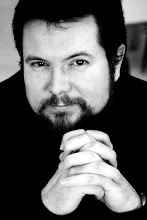
When I started blogging for Maclean's, my hope was to continue to post here now and again, but it has just not proven possible.
So this is the end. I'll be leaving existing posts up for a while in case anyone is interested, but there will be nothing new.
Thanks to everyone for reading and do come say hi at Maclean's Oncampus!
Tuesday, October 19, 2010


Friday, December 18, 2009
Rudolph the Realistic Reindeer (may offend)
Rudolph, the red-nosed reindeer
Had a very shiny nose.
And, if you ever saw it,
You would even say it glows.
All of the other reindeer,
Used to laugh and call him names
They never let poor Rudolph
Play in any reindeer games.
Then, one foggy Christmas Eve,
Santa came to say,
"Rudolph, with your nose so bright,
Won't you guide my sleigh tonight?"
Then Rudolph, said, "Are you kidding me? Where the hell were you when all the other reindeer were laughing and calling me names? I don't remember Jolly Old St Nick telling the other reindeer to let me play in the reindeer games! Oh, but now I can be of some use to you. Now, you need me, and now you want my help? Fuck you! Lead that team of bigots and assholes? Go to Hell, Santa!"
Had a very shiny nose.
And, if you ever saw it,
You would even say it glows.
All of the other reindeer,
Used to laugh and call him names
They never let poor Rudolph
Play in any reindeer games.
Then, one foggy Christmas Eve,
Santa came to say,
"Rudolph, with your nose so bright,
Won't you guide my sleigh tonight?"
Then Rudolph, said, "Are you kidding me? Where the hell were you when all the other reindeer were laughing and calling me names? I don't remember Jolly Old St Nick telling the other reindeer to let me play in the reindeer games! Oh, but now I can be of some use to you. Now, you need me, and now you want my help? Fuck you! Lead that team of bigots and assholes? Go to Hell, Santa!"
Friday, August 14, 2009
Need more Pettrichor?
Well, you're going to have to settle for what's here.
But if you want to read more of my blogging, check out my education-themed blog at Maclean's OnCampus:
http://oncampus.macleans.ca/education/category/blogs/the-hour-hand/
I will still be blogging here, especially when it's too spicy for the mainstream media, but I've promised Macleans a post a week over there. I hope you like it.
But if you want to read more of my blogging, check out my education-themed blog at Maclean's OnCampus:
http://oncampus.macleans.ca/education/category/blogs/the-hour-hand/
I will still be blogging here, especially when it's too spicy for the mainstream media, but I've promised Macleans a post a week over there. I hope you like it.
Monday, August 10, 2009
Fast talk: On Smelling
If I had to give up one of my five senses, it would be smell. I estimate that at least 95% of what I smell I would rather not.
I've heard that food doesn't taste as good if you've lost your sense of smell, but, frankly, that might be a relief. If food didn't taste as good, I would probably be a lot healthier. I once knew a guy who had a nasal condition that eliminated most of his sense of smell and he was as skinny as can be. I suppose smell is useful for detecting fires and things like that, but seriously, when was the last time you smelled your way out of danger? And there's always the smoke detector.
I've heard that food doesn't taste as good if you've lost your sense of smell, but, frankly, that might be a relief. If food didn't taste as good, I would probably be a lot healthier. I once knew a guy who had a nasal condition that eliminated most of his sense of smell and he was as skinny as can be. I suppose smell is useful for detecting fires and things like that, but seriously, when was the last time you smelled your way out of danger? And there's always the smoke detector.
Friday, May 29, 2009
The Strangest Conversation
Recently, I posted what I thought was a zippy little off-hand comment on someone's Facebook status which mentioned the need to have free university tuition. Then others started to respond and things kind of got out of hand. Here is a lightly parodied version:
Me: Free tuition would be bad for universities. People value what they pay for, so manageable tuitions, that don't unfairly burden graduates with debt, would be better than free tuitions.
Another person: How can you say that! People should not be kept out of university because they can't afford it! You obviously know nothing about education.
Me: Actually, as a university professor I know something about it, and I worry that free universities would lead to university standards slipping as they have done in high school -- because people would come to see universities as just another level of education to get through.
Someone else: You're obviously one of those free-market, right-wing elitist shitheads who think only the rich should go to university. Why not try selling your crap to someone who wants to go to university but can't afford it?
Me: No, you've missed my point. I think university should be much more affordable, just not free. There's surely a middle ground. Students could all afford $5 for the year, right? And for that matter, probably $100 or even $1000.
Still another person: With ridiculous ideas like these, you have no business being a university professor. Your arguments don't make any sense and are not backed up by sources. It's not appropriate for university professors to make these kinds of statements and you should really take some time to learn what good intellectual writing looks like since you clearly have no clue.
Me: What? This is a Facebook comment section! In a scholarly article, I would cite sources, but this is a casual conversation. As for my qualifications, if you are worried that I don't know what academic writing looks like feel free to check out my book which is held by libraries around the world.
Yet another: Ooh, he thinks just because he published a book, he must be right about everything! I could have published a book if tuitions weren't so high, but since you think high tuitions and massive debt are just great, you obviously don't care about people like me!
And so it went.
What struck me most about this strange conversation was that nobody seemed interested in reading what I had actually written or answering it on those terms. People continually assumed that if I were not in favour of free tuition I must be in favour of high tuitions and all that mean-spiritedness that presumably went along with that.
Now, maybe free tuitions are not such a bad thing. Many countries have free university tuition, and maybe they have found a way to keep standards high. I would be interested in knowing more about that. But not many people in the online conversation I've reconstructed above seemed willing or even able to see any of those complexities. It was either you are a fair-minded human being who beleives tuition should be free, or a selfish monster who believes students should suffer as much as possible.
I wonder if this is the way all political discussions are becoming: a series of binaries: pro-life or pro-choice, pacifist or war-monger, right or left, cultural relativist or racist. If so, our democracy is in for a rough ride.
And I should probably keep my thoughts off of Facebook.
Me: Free tuition would be bad for universities. People value what they pay for, so manageable tuitions, that don't unfairly burden graduates with debt, would be better than free tuitions.
Another person: How can you say that! People should not be kept out of university because they can't afford it! You obviously know nothing about education.
Me: Actually, as a university professor I know something about it, and I worry that free universities would lead to university standards slipping as they have done in high school -- because people would come to see universities as just another level of education to get through.
Someone else: You're obviously one of those free-market, right-wing elitist shitheads who think only the rich should go to university. Why not try selling your crap to someone who wants to go to university but can't afford it?
Me: No, you've missed my point. I think university should be much more affordable, just not free. There's surely a middle ground. Students could all afford $5 for the year, right? And for that matter, probably $100 or even $1000.
Still another person: With ridiculous ideas like these, you have no business being a university professor. Your arguments don't make any sense and are not backed up by sources. It's not appropriate for university professors to make these kinds of statements and you should really take some time to learn what good intellectual writing looks like since you clearly have no clue.
Me: What? This is a Facebook comment section! In a scholarly article, I would cite sources, but this is a casual conversation. As for my qualifications, if you are worried that I don't know what academic writing looks like feel free to check out my book which is held by libraries around the world.
Yet another: Ooh, he thinks just because he published a book, he must be right about everything! I could have published a book if tuitions weren't so high, but since you think high tuitions and massive debt are just great, you obviously don't care about people like me!
And so it went.
What struck me most about this strange conversation was that nobody seemed interested in reading what I had actually written or answering it on those terms. People continually assumed that if I were not in favour of free tuition I must be in favour of high tuitions and all that mean-spiritedness that presumably went along with that.
Now, maybe free tuitions are not such a bad thing. Many countries have free university tuition, and maybe they have found a way to keep standards high. I would be interested in knowing more about that. But not many people in the online conversation I've reconstructed above seemed willing or even able to see any of those complexities. It was either you are a fair-minded human being who beleives tuition should be free, or a selfish monster who believes students should suffer as much as possible.
I wonder if this is the way all political discussions are becoming: a series of binaries: pro-life or pro-choice, pacifist or war-monger, right or left, cultural relativist or racist. If so, our democracy is in for a rough ride.
And I should probably keep my thoughts off of Facebook.
Thursday, April 30, 2009
You, Me and Other People
American politicians love to criticize people who are nominated for things, and a recent Time magazine article mentioned that a current fight centres around US involvement in international treaties and laws. The worry is always about national sovereignty: "Why should our people be subject to rules and decisions made by people we didn't elect?" I heard similar objections when I was in England by people suspicious of the EU Parliament. A variation emerged in Canada when Stephen Harper said he was all about a "made in Canada" solution to global climate change.
You can see the emptiness of the argument by extending it. If I demand to know why I, as a Canadian, should be subject to decisions made in Geneva or New York, I must also ask why I, as a Nova Scotian, should be subject to decisions made in Ottawa. For that matter, why should I, as a Cape Bretoner, be subject to the whims of government officials in Halifax? Damn it, why should I, a resident of Glace Bay, have to kow tow to the fat cats in Sydney? I live on Quarry Point, so why should I care what the gang over in The Hub thinks? In fact, why should I, as a free individual, have to listen to anyone at all?
The answers are obvious and they extend right back to international cooperation. Simply put, as the problems get bigger, the solutions require more people. I can handle some things on my own, but I don't have a place for all my garbage, so I rely on my local government to collect my trash. My municipality can't run its own education or health care systems, so those are done by the province. Each province can't have its own military; the Federal government looks after that. Canada alone cannot solve our climate problems or eliminate nuclear weapons or any number of the big problems of the world. That has to be done on an international scale.
At every level, some personal autonomy is lost, but the benefits are worth it. I don't get to choose the day the trash gets picked up, but I don't care as long as it gets picked up. I don't choose the local high school principal, and I don't want to. I'll let others do that. Ditto for defending that borders. We all enjoy benefits from citizenship even if it means other people are making decisions that affect us. Alaskans benefit from being citizens of the USA just as Yorkshiremen benefit from being citizens of the UK, even if it means taking direction from the Congress in Washington or the Parliament in London; Chiang Mai depends on Bangkok, and Brisbane relies on Canberra. Fill in your own localities here.
Why should we give control to those that we ourselves did not elect? Because sometimes that's the only way it works.
You can see the emptiness of the argument by extending it. If I demand to know why I, as a Canadian, should be subject to decisions made in Geneva or New York, I must also ask why I, as a Nova Scotian, should be subject to decisions made in Ottawa. For that matter, why should I, as a Cape Bretoner, be subject to the whims of government officials in Halifax? Damn it, why should I, a resident of Glace Bay, have to kow tow to the fat cats in Sydney? I live on Quarry Point, so why should I care what the gang over in The Hub thinks? In fact, why should I, as a free individual, have to listen to anyone at all?
The answers are obvious and they extend right back to international cooperation. Simply put, as the problems get bigger, the solutions require more people. I can handle some things on my own, but I don't have a place for all my garbage, so I rely on my local government to collect my trash. My municipality can't run its own education or health care systems, so those are done by the province. Each province can't have its own military; the Federal government looks after that. Canada alone cannot solve our climate problems or eliminate nuclear weapons or any number of the big problems of the world. That has to be done on an international scale.
At every level, some personal autonomy is lost, but the benefits are worth it. I don't get to choose the day the trash gets picked up, but I don't care as long as it gets picked up. I don't choose the local high school principal, and I don't want to. I'll let others do that. Ditto for defending that borders. We all enjoy benefits from citizenship even if it means other people are making decisions that affect us. Alaskans benefit from being citizens of the USA just as Yorkshiremen benefit from being citizens of the UK, even if it means taking direction from the Congress in Washington or the Parliament in London; Chiang Mai depends on Bangkok, and Brisbane relies on Canberra. Fill in your own localities here.
Why should we give control to those that we ourselves did not elect? Because sometimes that's the only way it works.
Wednesday, April 01, 2009
Fox Hole
I have just read yet another angry comment about comments on Fox News regarding the Canadian military.
Enough already.
For one thing, no one has yet explained to me why the original comment -- that Canada's military would take a year off after Afghanistan -- was not silly and not deserving of ridicule. For another, every time someone makes a stink about this, it insults the very military they think they are defending. To get up-in-arms about Fox News blather is to imply that our soldiers are going to be hurt by it in the first place, and that's ridiculous. It's like your mom coming on to the diamond to argue balls and strikes. Shut up, already. It's embarrassing.
The only sound response to the original comments about Canada being a ridiculous country that no one knew was even in the war is as follows: "Canadian men and women are putting their lives on the line every day to defend an oppressed people from extremist thugs. They are serious, disciplined, well-trained, and the ramblings of comedians on late-night talk shows couldn't bother them in the least. They have more important things to worry about."
Enough already.
For one thing, no one has yet explained to me why the original comment -- that Canada's military would take a year off after Afghanistan -- was not silly and not deserving of ridicule. For another, every time someone makes a stink about this, it insults the very military they think they are defending. To get up-in-arms about Fox News blather is to imply that our soldiers are going to be hurt by it in the first place, and that's ridiculous. It's like your mom coming on to the diamond to argue balls and strikes. Shut up, already. It's embarrassing.
The only sound response to the original comments about Canada being a ridiculous country that no one knew was even in the war is as follows: "Canadian men and women are putting their lives on the line every day to defend an oppressed people from extremist thugs. They are serious, disciplined, well-trained, and the ramblings of comedians on late-night talk shows couldn't bother them in the least. They have more important things to worry about."
Tuesday, February 17, 2009
Controversial
Officials at Halifax transit have refused to allow atheist bus ads on the grounds that they are too "controversial." Controversial. That's a coward's word. It is Halifax transit's way of not dealing with the real issue. Either they are willing to defend free expression or they are not; if they are willing to deny paid, legal advertising that expresses the benign sentiment that "You can be good without God," they should be prepared to explain what's wrong with it. And if they do decide to arbitrarily stomp on free expression, they should not hide behind vague worries about "controversy." First of all, what's wrong with controversy? Isn't this a democracy where we seek to advance ourselves through debate and discussion? Aren't most important ideas controversial at some point? God save us from a world without controversy. Or is there a God? Apparently the Halifax transit authority knows for sure.
What is the effect of only allowing non-controversial opinions to be expressed in public venues? It is to allow free speech for those who hold the most conservative views and to exclude new and radical ideas. Avoiding "controversy" is the spineless administrator's excuse for supporting the status quo.
What is the effect of only allowing non-controversial opinions to be expressed in public venues? It is to allow free speech for those who hold the most conservative views and to exclude new and radical ideas. Avoiding "controversy" is the spineless administrator's excuse for supporting the status quo.
Saturday, February 07, 2009
The ugly truth about tolerance
Recently, atheist groups have been putting ads in buses saying things like, "There's probably no God. Now, stop worrying and get on with your life." Probably no God? What kind of atheists are these?
The ad campaign began in London and is spreading, including to Canada, where religious groups are, to no one's surprise, displeased. Charles McVety, who runs the Canada Family Action Coalition (atheists don't have families?) was quoted recently in the Globe and Mail saying that while "On the surface I'm all for free speech...these are attack ads." He goes on to say that these ads are bigotted because they are "intolerant of someone else's belief system."
Now, setting aside for a moment the observation that everyone seems to be in favour of free speech except when people say anything that makes them upset, McVety has a troubling, and all too common of view of what constitutes intolerance. He seems to feel that tolerance is not merely a matter of allowing others to think and say what they feel, but rather it is accepting quietly anything that others say. To attack the beliefs of others, he says, is intolerant.
Well, that idea is stupid.
Tolerance is only tolerance. Tolerance is tolerating the fact that others may have views that are opposed to yours -- even diametrically opposed. To tolerate is to allow freedom to speak, to not physically harm those who oppose you, or to put them in jail, or deny them jobs for no good reason, and so on. It cannot be expanded to include a requirement that we must accept or agree not to oppose those we disagree with.
Why not? Why shouldn't we accept the views of everyone? Two reasons. First, it can't be done. To suggest any meaningful point of view is to implicitly deny the truth of opposing views. What McVety really wants is not a world in which nobody denies anybody else's views, but a world where no one denies his views and he can go on denying theirs. He wants to be able to say that Christ is Lord without caring that he is opposing the beliefs of Jews, Muslims, atheists and other non-Christians. This, I suspect, is true of all those who say "I believe in freedom of speech but..."; after the but comes "not when it offends my beliefs." Indeed, the CFAC buys ads and issues press releases like this one saying that gay marriage must be overturned because it normalizes homosexuality. And they have the nerve to preach about tolerance?
The other reason we must be free to tolerate but oppose one another is that serious issues come up in the voyage of life and they must be dealt with. Only through real debate, with all the confusion, anger, and hurt feelings that can come with it, can we chart our course with confidence.
But shouldn't religion be off limits? Isn't criticizing someone's religion like criticizing their race? No and no. Religion must be in bounds because it is a set of views about the world and views about the world are not intrinsic to their holders. They can be -- and have been -- changed and reexamined or, as is often the case with history's religions, abandoned altogether. You cannot argue against a person's whiteness or their arab background -- these are biological and historical facts. But you can argue that Christianity contributed to the oppression of women or that Islam must be reclaimed by its moderates, or that there is no God, and so on. These are real issues, and they are serious, and we cannot let religious people attack the freedoms and beliefs of others while claiming they should be immune from such attacks themselves.
That's not tolerance. It's tyranny.
The ad campaign began in London and is spreading, including to Canada, where religious groups are, to no one's surprise, displeased. Charles McVety, who runs the Canada Family Action Coalition (atheists don't have families?) was quoted recently in the Globe and Mail saying that while "On the surface I'm all for free speech...these are attack ads." He goes on to say that these ads are bigotted because they are "intolerant of someone else's belief system."
Now, setting aside for a moment the observation that everyone seems to be in favour of free speech except when people say anything that makes them upset, McVety has a troubling, and all too common of view of what constitutes intolerance. He seems to feel that tolerance is not merely a matter of allowing others to think and say what they feel, but rather it is accepting quietly anything that others say. To attack the beliefs of others, he says, is intolerant.
Well, that idea is stupid.
Tolerance is only tolerance. Tolerance is tolerating the fact that others may have views that are opposed to yours -- even diametrically opposed. To tolerate is to allow freedom to speak, to not physically harm those who oppose you, or to put them in jail, or deny them jobs for no good reason, and so on. It cannot be expanded to include a requirement that we must accept or agree not to oppose those we disagree with.
Why not? Why shouldn't we accept the views of everyone? Two reasons. First, it can't be done. To suggest any meaningful point of view is to implicitly deny the truth of opposing views. What McVety really wants is not a world in which nobody denies anybody else's views, but a world where no one denies his views and he can go on denying theirs. He wants to be able to say that Christ is Lord without caring that he is opposing the beliefs of Jews, Muslims, atheists and other non-Christians. This, I suspect, is true of all those who say "I believe in freedom of speech but..."; after the but comes "not when it offends my beliefs." Indeed, the CFAC buys ads and issues press releases like this one saying that gay marriage must be overturned because it normalizes homosexuality. And they have the nerve to preach about tolerance?
The other reason we must be free to tolerate but oppose one another is that serious issues come up in the voyage of life and they must be dealt with. Only through real debate, with all the confusion, anger, and hurt feelings that can come with it, can we chart our course with confidence.
But shouldn't religion be off limits? Isn't criticizing someone's religion like criticizing their race? No and no. Religion must be in bounds because it is a set of views about the world and views about the world are not intrinsic to their holders. They can be -- and have been -- changed and reexamined or, as is often the case with history's religions, abandoned altogether. You cannot argue against a person's whiteness or their arab background -- these are biological and historical facts. But you can argue that Christianity contributed to the oppression of women or that Islam must be reclaimed by its moderates, or that there is no God, and so on. These are real issues, and they are serious, and we cannot let religious people attack the freedoms and beliefs of others while claiming they should be immune from such attacks themselves.
That's not tolerance. It's tyranny.
Friday, January 30, 2009
Fast Talk: It came from the Movie Title!
Wal-Mart, I learn, will not sell the Kevin Smith film Zack and Miri Make a Porno unless the word "Porno" is taken out of the title.
Seriously? I wonder if the retail giant will go through its back titles to edit them, too. Dial M for Murder might get redacted to Dial M. What's next, The Unstigmatized Mental Illness of King George? Look for the final installment of the Star Wars trilogy as The Justifiable Concerns of the Sith.
Here are some more titles to look for coming soon to DVD at Walmart:
The Bright Knight
Frost/Obama
Dog Millionaire
Seriously? I wonder if the retail giant will go through its back titles to edit them, too. Dial M for Murder might get redacted to Dial M. What's next, The Unstigmatized Mental Illness of King George? Look for the final installment of the Star Wars trilogy as The Justifiable Concerns of the Sith.
Here are some more titles to look for coming soon to DVD at Walmart:
The Bright Knight
Frost/Obama
Dog Millionaire
Sunday, January 18, 2009
Fast Talk: Receipts
I was at a local big-box store today and purchased a set of headphones. One single item. I made my purchase, and was handed a receipt that measures over 11 inches in length -- longer than an ordinary piece of paper. The receipt includes the following information: the store name, the contract ID number (we have a contract?), the store's address and phone number, the date and time, the store name again, the item I purchased, the cost of the item, an invitation to tell them how they are doing online, a promise that if I fill out the online survey I could win a gift card, a series of codes for when I go online and do the survey, an indication of where I can find the contest rules (not printed on the receipt thankfully), a notice indicating I can order items online and pick them up at the store if I want to, the price of my item again, the tax amount, the total, four digits from my Visa number (plus 12 Xs), the GST registration number, something called the ACI/ISO#, and a final note that (wait for it) I bought just one thing.
Now, I'm glad to have some this -- the total and a reminder of which credit card I put it on, but do I really need all this information and does it really have to take up so much paper? This store must dole out the equivalent of thousands of sheets of paper a day at this rate. But what really bugs me is that half of the damn thing is marketing and advertising. I know stores must advertise, but can I not be shielded from the marketers even immediately after I've made a purchase? It's like the waiter at a restaurant bringing you another menu at the end of the meal in case you want to take something out or order ahead before your next meal. I'm not hungry! I just ate! Leave me alone!
Next time I'm tearing off the part I need and giving them the rest back. See how they like having a lot of useless paper on their desks.
Now, I'm glad to have some this -- the total and a reminder of which credit card I put it on, but do I really need all this information and does it really have to take up so much paper? This store must dole out the equivalent of thousands of sheets of paper a day at this rate. But what really bugs me is that half of the damn thing is marketing and advertising. I know stores must advertise, but can I not be shielded from the marketers even immediately after I've made a purchase? It's like the waiter at a restaurant bringing you another menu at the end of the meal in case you want to take something out or order ahead before your next meal. I'm not hungry! I just ate! Leave me alone!
Next time I'm tearing off the part I need and giving them the rest back. See how they like having a lot of useless paper on their desks.
Tuesday, January 06, 2009
Some wisdom for my walls
As regular readers of this space may recall, I am not a religious man, but I do believe that all long-standing religions have some wisdom to offer us. How could it be otherwise when the best minds of the various civilizations have given themselves up to contemplating the world through the lenses of their various traditions?
But it was recently pointed out to me that my own home shows little of this attitude. I have some Buddhist pictures and related items around, and many books about various religions (and about atheism), but not much to suggest the view that I have outlined above.
Rising to this challenge I resolved (and promised) to select quotations from representatives of the great spiritual traditions of the world to adorn my study's walls. The stairway in my house already has quotations from some ancient pagans (like Aristotle), so I will take paganism as covered. Of course, I cannot have a quotation from every religion, but here is what I have for five, and I'm pretty pleased with them. In all cases I have tried to select either from religious texts themselves or believers (I had to rule out Einstein, here, because I am convinced that he was, in the main, an atheist).
Islam
"The ground's generosity takes in our compost and grows beauty! Try to be more like the ground." (Rumi)
Christianity
"When I was a child, I spake as a child, I understood as a child, I thought as a child: but when I became a man, I put away childish things." (Paul)
Judaism
"The question put by a wise man is half the answer." (Shlomo ben Yehudah)
Hinduism
"Weigh a man's merits and weigh his faults. Then judge him according to the greater." (Tirukkural)
Buddhism
"If your compassion does not include yourself, it is incomplete." (Jack Kornfield)
But it was recently pointed out to me that my own home shows little of this attitude. I have some Buddhist pictures and related items around, and many books about various religions (and about atheism), but not much to suggest the view that I have outlined above.
Rising to this challenge I resolved (and promised) to select quotations from representatives of the great spiritual traditions of the world to adorn my study's walls. The stairway in my house already has quotations from some ancient pagans (like Aristotle), so I will take paganism as covered. Of course, I cannot have a quotation from every religion, but here is what I have for five, and I'm pretty pleased with them. In all cases I have tried to select either from religious texts themselves or believers (I had to rule out Einstein, here, because I am convinced that he was, in the main, an atheist).
Islam
"The ground's generosity takes in our compost and grows beauty! Try to be more like the ground." (Rumi)
Christianity
"When I was a child, I spake as a child, I understood as a child, I thought as a child: but when I became a man, I put away childish things." (Paul)
Judaism
"The question put by a wise man is half the answer." (Shlomo ben Yehudah)
Hinduism
"Weigh a man's merits and weigh his faults. Then judge him according to the greater." (Tirukkural)
Buddhism
"If your compassion does not include yourself, it is incomplete." (Jack Kornfield)
Saturday, November 29, 2008
The Death of Dignity
So the good people of Valley Stream, New York, now have a dubious claim to fame: they are the world's deadliest shoppers. News reports around the world reported that Jdimytai Damour, an employee at the local Wal-Mart, died after a crowd smashed the door and trampled him as they rushed to find holiday bargains. This, at 4:55 am, 5 minutes before the store was set to open. As authorities struggled to close the store, shoppers were indignant. Even when told a man had died, some insisted they be permitted to continue shopping. Noone is being charged in the incident, but union officials and police are blaming Wal-Mart for having insufficient security.
Seriously? The fault is with the store for not stopping the crowd from becoming a deadly mob in the first place? Maybe, it's just me, but I'm inclined to blame the people who, you know, TRAMPLED A MAN TO DEATH.
To be sure, many were likely tired and frustrated by a long wait. Perhaps some were obsessed with finding the toy that -- in its absence -- would ruin Christmas for their children. And I'm sure that none of them meant for anyone to get hurt. There are plenty of excuses. Still, what line of reasoning compels not a few, but two thousand people to line up outside a Wal-Mart in the middle of the night, so that they can go shopping at five am? I wouldn't do it. You know why?
It's beneath me.
This sort of thinking is too rare these days. In our egalitarian world, the idea that certain things are beneath one's dignity seems like snobbery. Thus that which is crass and embarrassing can be undertaken without second thought. And if we feel no embarrassment over lining up at 3 in the morning to be the first to get a stuffed toy or MP3 player, what's wrong with pushing someone out of the way to get it. And if we're not ashamed to push people, why not step on one or two as well. And if someone dies, well, at least I have my new TV.
Seriously? The fault is with the store for not stopping the crowd from becoming a deadly mob in the first place? Maybe, it's just me, but I'm inclined to blame the people who, you know, TRAMPLED A MAN TO DEATH.
To be sure, many were likely tired and frustrated by a long wait. Perhaps some were obsessed with finding the toy that -- in its absence -- would ruin Christmas for their children. And I'm sure that none of them meant for anyone to get hurt. There are plenty of excuses. Still, what line of reasoning compels not a few, but two thousand people to line up outside a Wal-Mart in the middle of the night, so that they can go shopping at five am? I wouldn't do it. You know why?
It's beneath me.
This sort of thinking is too rare these days. In our egalitarian world, the idea that certain things are beneath one's dignity seems like snobbery. Thus that which is crass and embarrassing can be undertaken without second thought. And if we feel no embarrassment over lining up at 3 in the morning to be the first to get a stuffed toy or MP3 player, what's wrong with pushing someone out of the way to get it. And if we're not ashamed to push people, why not step on one or two as well. And if someone dies, well, at least I have my new TV.
Wednesday, November 26, 2008
Fast Talk: Inappropriate
I read in the news today that Carleton University's student's union has embarrassed itself by canceling its annual cystic fibrosis fundraiser on the grounds that the disease affects mainly white men, and why should they get any help? But what interests me most is the university's response. The President expressed "regret" over the decision and said the student union used language that was "inappropriate."
Leaving aside the issue of how one can regret something that someone else did, I'm really starting to chafe at the overuse of the word "inappropriate." To be sure, there are times when appropriateness of language is important, but it has become commonplace to reject any statement one objects to as "inappropriate." It's a nasty little trick, though. Nasty because it tends to head off any debate over the original utterance. One can't defend the original statement because it was never attacked as wrong, just inappropriate. And since what's appropriate is usually a matter of taste, the conversation typically ends there. Meanwhile the university president (or whoever) seems to take a thoughtful moral stand without having to actually take a stand on anything at all.
What the Carleton President should have said was that the student union's motion was wrong in its facts and shameful in its mean-spiritedness. But then I suppose I'm expecting too much for a leader of an institution of higher education.
Such courage would, I guess, be inappropriate.
Leaving aside the issue of how one can regret something that someone else did, I'm really starting to chafe at the overuse of the word "inappropriate." To be sure, there are times when appropriateness of language is important, but it has become commonplace to reject any statement one objects to as "inappropriate." It's a nasty little trick, though. Nasty because it tends to head off any debate over the original utterance. One can't defend the original statement because it was never attacked as wrong, just inappropriate. And since what's appropriate is usually a matter of taste, the conversation typically ends there. Meanwhile the university president (or whoever) seems to take a thoughtful moral stand without having to actually take a stand on anything at all.
What the Carleton President should have said was that the student union's motion was wrong in its facts and shameful in its mean-spiritedness. But then I suppose I'm expecting too much for a leader of an institution of higher education.
Such courage would, I guess, be inappropriate.
Monday, October 20, 2008
Universities and Democracy
I have voted in every federal and provincial election in
1. A great many, if not most, voters are woefully under-informed about the issues.
2. A great many, if not most, voters vote based on things other than the issues, such as who their parents voted for.
3. Modern politics features very little debate over substantial matters and leans instead of ad hominem attacks and generic “messages” that ignore the serious and complex problems that we face.
In response to this, I could only feebly invoke the old saw that democracy is the worst system of government except for all the others. Shouldn’t there be a better way? I found myself frequently thinking back to the suggestion made by H.L Mencken that legislators should be chosen like jury members: at random and against their will.
But my thinking on democracy may be changing, and my inspiration came from a strange place: David Mamet’s play about university politics, Oleanna. In the play, a pompous professor, who has made his career by criticizing higher education as, among other things, a form of torture, is attacked by a student for various abuses of power. Her attacks are unfair, but he is finished before he even begins to defend himself because he has already refuted his own defense: which is the system itself is a fair one and justifies his exercise of reasonable power over his students.
In other words, what he should point out is that professors should have authority at universities because they have earned PhDs, and because they have won their positions over those less qualified, and because they have been reviewed repeatedly prior to earning tenure. But, comes the reply, does it not happen that poorly qualified candidates are hired? Yes. Do not some incompetent or mean-spirited professors earn tenure despite the reviews? Yes, they do. But the system itself is not a bad one, even with its imperfections, and it’s probably better than the alternatives.
Democracy is this way, too, I think. If a member of parliament were asked what gives her the right to enact laws, she would rightly say that being elected by her constituents gives her the right. Do some foolish and venial people get elected? Of course, but the system itself is a good one, and better than the alternatives. And not just better than the alternatives (as the old saw has it) but noble: the people choose who will rule on their behalf; the governors are responsible to those they govern.
All great endeavours are compromised daily by the quotidian reality of human life. But we persevere because the ideas themselves – justice, democracy, education – are worth holding onto.
Next election, I will be voting.
Thursday, June 05, 2008
Wonderful World of ISDY: Seattle
Recently, a staff member at a Seattle Mariners game asked two women in the stands (one of whom apparently was a minor celebrity following a stint on a reality TV show) to stop kissing because it was making other patrons uncomfortable, even though other heterosexual couples were making out nearby. The supposed reason the women were singled out? There were kids around.
Now, I can understand it (though not condone it) if an overzealous usher does something stupid. Stupid happens. But what has amazed me is that in a town that I thought would have roundly condemned this obviously discriminatory act, an enormous debate has broken out as to whether or not gays and lesbians should be treated like everyone else.
According to one Seattleite: "I don't think it's right seeing women kissing in public. If I had my family there, I'd have to explain what's going on.'' Right. Why on Earth would anyone want to explain something to a child? Where would parents be if they had to explain things to their children? Good lord, what if they start asking why the man running for President is black?
Seriously, what is so hard about saying to little Courtney or whatever her name is, "Well, a lot of men like to kiss women and a lot of women like to kiss men. But some men like to kiss other men and some women like to kiss other women." It's not like the kid is asking about the infield fly rule.
Of course, it's not that the outraged fans can't explain it. They don't want to. Why not? First, because if they have to explain it, they can't pretend it isn't real. Second, if they explain it to their kids, the kids might not disapprove.
People of Seattle: I'm so disappointed in you.
Now, I can understand it (though not condone it) if an overzealous usher does something stupid. Stupid happens. But what has amazed me is that in a town that I thought would have roundly condemned this obviously discriminatory act, an enormous debate has broken out as to whether or not gays and lesbians should be treated like everyone else.
According to one Seattleite: "I don't think it's right seeing women kissing in public. If I had my family there, I'd have to explain what's going on.'' Right. Why on Earth would anyone want to explain something to a child? Where would parents be if they had to explain things to their children? Good lord, what if they start asking why the man running for President is black?
Seriously, what is so hard about saying to little Courtney or whatever her name is, "Well, a lot of men like to kiss women and a lot of women like to kiss men. But some men like to kiss other men and some women like to kiss other women." It's not like the kid is asking about the infield fly rule.
Of course, it's not that the outraged fans can't explain it. They don't want to. Why not? First, because if they have to explain it, they can't pretend it isn't real. Second, if they explain it to their kids, the kids might not disapprove.
People of Seattle: I'm so disappointed in you.
Sunday, June 01, 2008
From the Mailbag: Not Single?
Q. I've heard that you're not single anymore and that you have a girlfriend. What was the dating scene like?
A. The thing that no one emphasizes about dating is that it's largely spending time with strangers, and I have never been good with strangers. It takes me a while to get to feel comfortable with people. I kept imagining first dates filled with sparkling and witty conversation, and maybe that happens for people if they are really lucky. And if they are lucky enough to go out with someone more instantly charming than I.
As for my girlfriend -- and I have to say, I love saying I have a girlfriend -- she and I kind of stumbled into a relationship. For a while, I thought I definitely did NOT want to end up in a relationship that way. I wanted to meet someone out of the blue and be absolutely dazzled and all that jazz. But now I see that the old saw about the journey and not the destination does not apply here. With love, it's where you end up, not how you get there.
A. The thing that no one emphasizes about dating is that it's largely spending time with strangers, and I have never been good with strangers. It takes me a while to get to feel comfortable with people. I kept imagining first dates filled with sparkling and witty conversation, and maybe that happens for people if they are really lucky. And if they are lucky enough to go out with someone more instantly charming than I.
As for my girlfriend -- and I have to say, I love saying I have a girlfriend -- she and I kind of stumbled into a relationship. For a while, I thought I definitely did NOT want to end up in a relationship that way. I wanted to meet someone out of the blue and be absolutely dazzled and all that jazz. But now I see that the old saw about the journey and not the destination does not apply here. With love, it's where you end up, not how you get there.
Friday, May 30, 2008
New Feature: Mailbag
Every once in a very long while, someone tells me that they want me to write more on this blog. I'd like to help out, but I've been a little tapped out in the ideas department lately.
So help me out: what have you been dying to know about what I think?
Email me at pettrichor@hotmail.com and mention that the question is for the blog. I won't reveal your name to the blog-reading public in general, I promise.
So help me out: what have you been dying to know about what I think?
Email me at pettrichor@hotmail.com and mention that the question is for the blog. I won't reveal your name to the blog-reading public in general, I promise.
Age and Respect
A little while ago I came across a list of things that one was supposed to do to make the local community better. I remember two of them, one I thought was smart -- "Fix it even if you didn't break it" -- and one I thought was stupid: "respect your elders."
Now, in case anyone older than me reads this blog (I doubt it, but just in case), I'm not calling for a campaign against the elderly or anything like that. But I hear this "respect the elders" thing a lot and it never fails to bother me. When I was more directly involved with the Green Party I used to hear a lot about how we should be tapping this valuable resource that was the elderly; they were the ones who could guide the younger generation and so on and so on. In some churches, I understand, the board of directors is actually termed "elders."
But is it really the case that the simple fact of being advanced in years lends one a great store of wisdom and gravitas? I doubt it. Certainly, those who have been around the sun a few more times than the rest of us may have had the chance to acquire wisdom and no doubt some have, but as far as I can tell, age is just as likely to bring prejudice and bitterness as it is to bring compassion and wisdom.
The whole appeal to respect for elders is an instance of easy self-congratulation by those who make the appeal. If I look to the silver-haired old sages for guidance, I myself must be wise and thoughtful since I recognize the dignity and insight of the older generation. Don't fall for it. Judge people as they ought to be judged, on their own character and behaviour, not on their membership in any group. The young may be distinguished by their energy or burdened by naivete; the old may be enlivened by sagacity or weighed down by self-righteousness. Take your human goodness where you find it.
Now, in case anyone older than me reads this blog (I doubt it, but just in case), I'm not calling for a campaign against the elderly or anything like that. But I hear this "respect the elders" thing a lot and it never fails to bother me. When I was more directly involved with the Green Party I used to hear a lot about how we should be tapping this valuable resource that was the elderly; they were the ones who could guide the younger generation and so on and so on. In some churches, I understand, the board of directors is actually termed "elders."
But is it really the case that the simple fact of being advanced in years lends one a great store of wisdom and gravitas? I doubt it. Certainly, those who have been around the sun a few more times than the rest of us may have had the chance to acquire wisdom and no doubt some have, but as far as I can tell, age is just as likely to bring prejudice and bitterness as it is to bring compassion and wisdom.
The whole appeal to respect for elders is an instance of easy self-congratulation by those who make the appeal. If I look to the silver-haired old sages for guidance, I myself must be wise and thoughtful since I recognize the dignity and insight of the older generation. Don't fall for it. Judge people as they ought to be judged, on their own character and behaviour, not on their membership in any group. The young may be distinguished by their energy or burdened by naivete; the old may be enlivened by sagacity or weighed down by self-righteousness. Take your human goodness where you find it.
Monday, February 04, 2008
Fast Talk: Alphabetical Order
Sometimes I get an idea for a blog entry but it doesn't really blossom into a fully formed entry in my head, so the darn thing never gets written. But then I thought, why should these little gems lay buried in the deep ocean of my mind, unseen by the masses hungry for my insights? Then I thought I was full of myself.
Nevertheless, I am instituting a new feature here on the blog. At first I was going to call them "Quickies" but hey, this is a blog for all ages, so I settled on "Fast Talk." These entries will be short and sweet but every bit as odd and charming as the full length versions. Enjoy.
Alphabetical Order
Every once in a while someone notices that my books and CDs and DVDs are arranged in alphabetical order and they chuckle at me with the look that communicates sympathy for my obvious OCD. Sometimes there is even a patronizing, "You put these all in alphabetical order?"
But I like alphabetical order. For one thing, there are often delightful little ironies that emerge when things are arranged alphabetically. My movie collection finds Finding Nemo right next to A Fish Called Wanda. How wonderful!
But even more wonderful is the profound elegance of it. A few easy to remember rules and any mass of information -- the titles of every movie ever made, let's say -- can be put into a useful arrangement with due diligence. I get a thrill putting a new title in it's proper place knowing it is in its proper place, Superman modestly moving aside to make way for Spiderman, 50 First Dates and 10 Things I Hate About You sliding in nervously next to 12 Angry Men (in my system, numbers go first before letters, though I could have treated them as if the words were spelled out -- these are judgement calls).
So when my friends snicker at me for putting things in alphabetical order, I snicker back with an equally patronizing, "how else would you do it?"
Nevertheless, I am instituting a new feature here on the blog. At first I was going to call them "Quickies" but hey, this is a blog for all ages, so I settled on "Fast Talk." These entries will be short and sweet but every bit as odd and charming as the full length versions. Enjoy.
Alphabetical Order
Every once in a while someone notices that my books and CDs and DVDs are arranged in alphabetical order and they chuckle at me with the look that communicates sympathy for my obvious OCD. Sometimes there is even a patronizing, "You put these all in alphabetical order?"
But I like alphabetical order. For one thing, there are often delightful little ironies that emerge when things are arranged alphabetically. My movie collection finds Finding Nemo right next to A Fish Called Wanda. How wonderful!
But even more wonderful is the profound elegance of it. A few easy to remember rules and any mass of information -- the titles of every movie ever made, let's say -- can be put into a useful arrangement with due diligence. I get a thrill putting a new title in it's proper place knowing it is in its proper place, Superman modestly moving aside to make way for Spiderman, 50 First Dates and 10 Things I Hate About You sliding in nervously next to 12 Angry Men (in my system, numbers go first before letters, though I could have treated them as if the words were spelled out -- these are judgement calls).
So when my friends snicker at me for putting things in alphabetical order, I snicker back with an equally patronizing, "how else would you do it?"
Subscribe to:
Posts (Atom)